Play
Pause
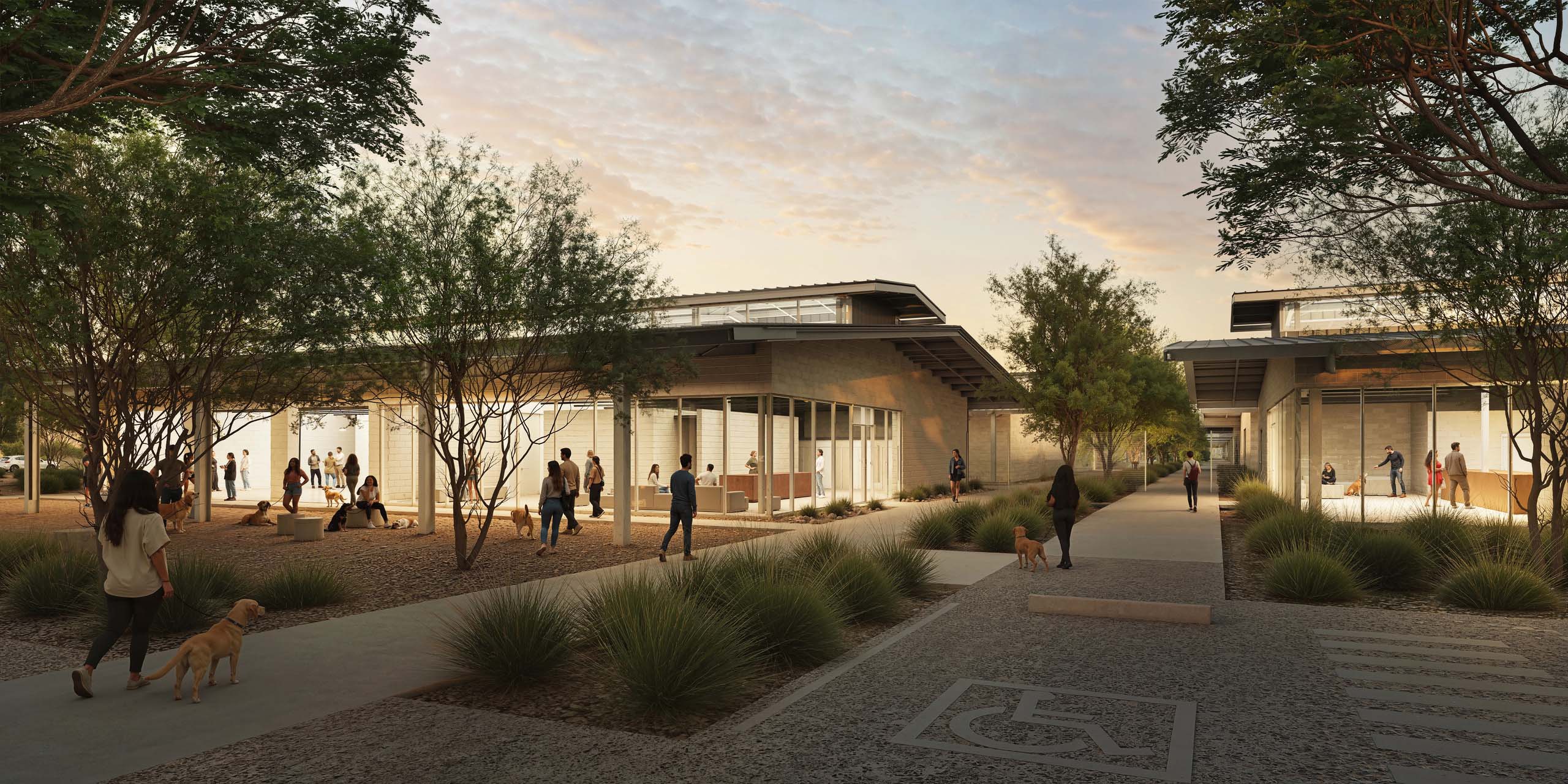

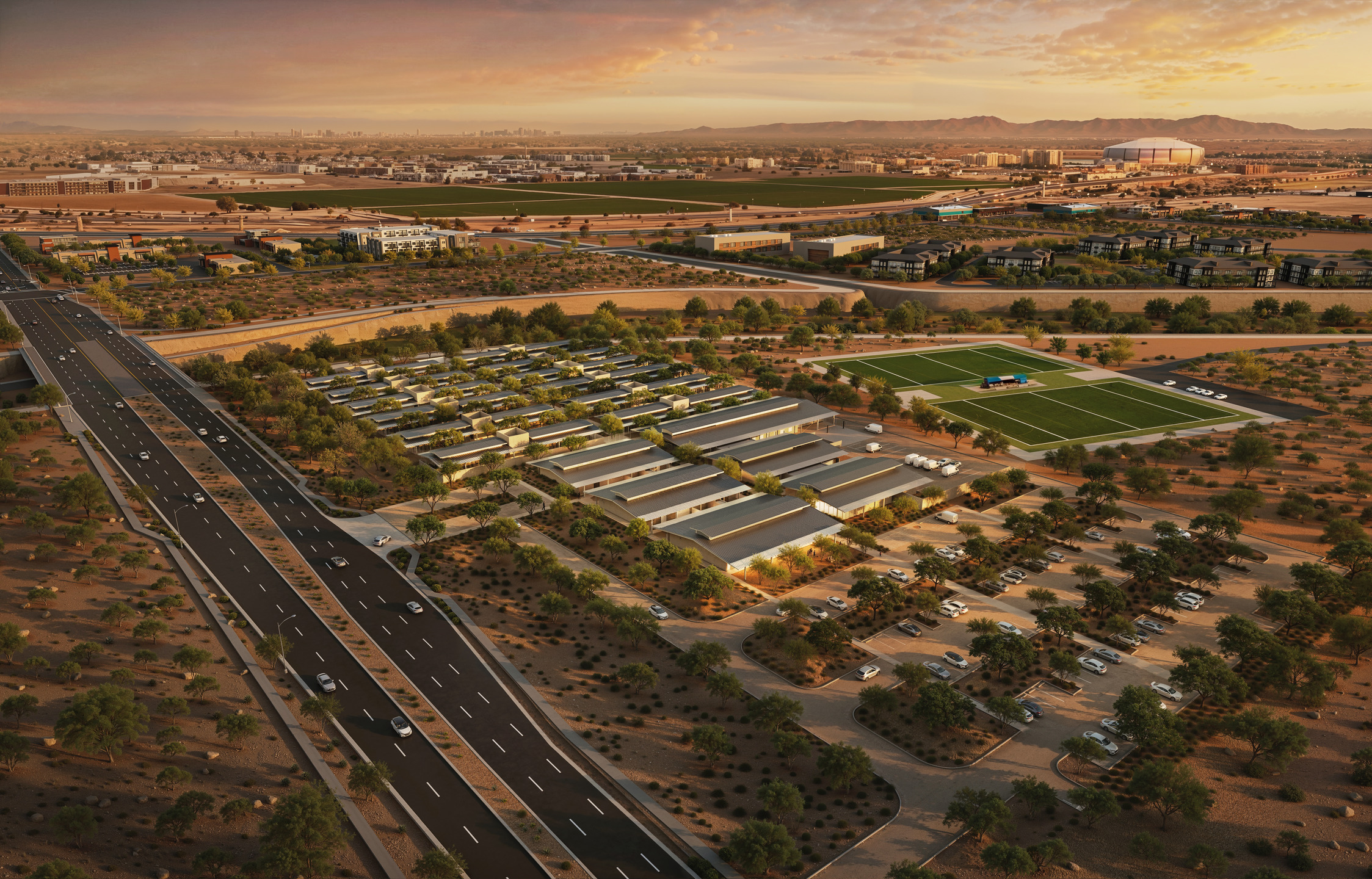
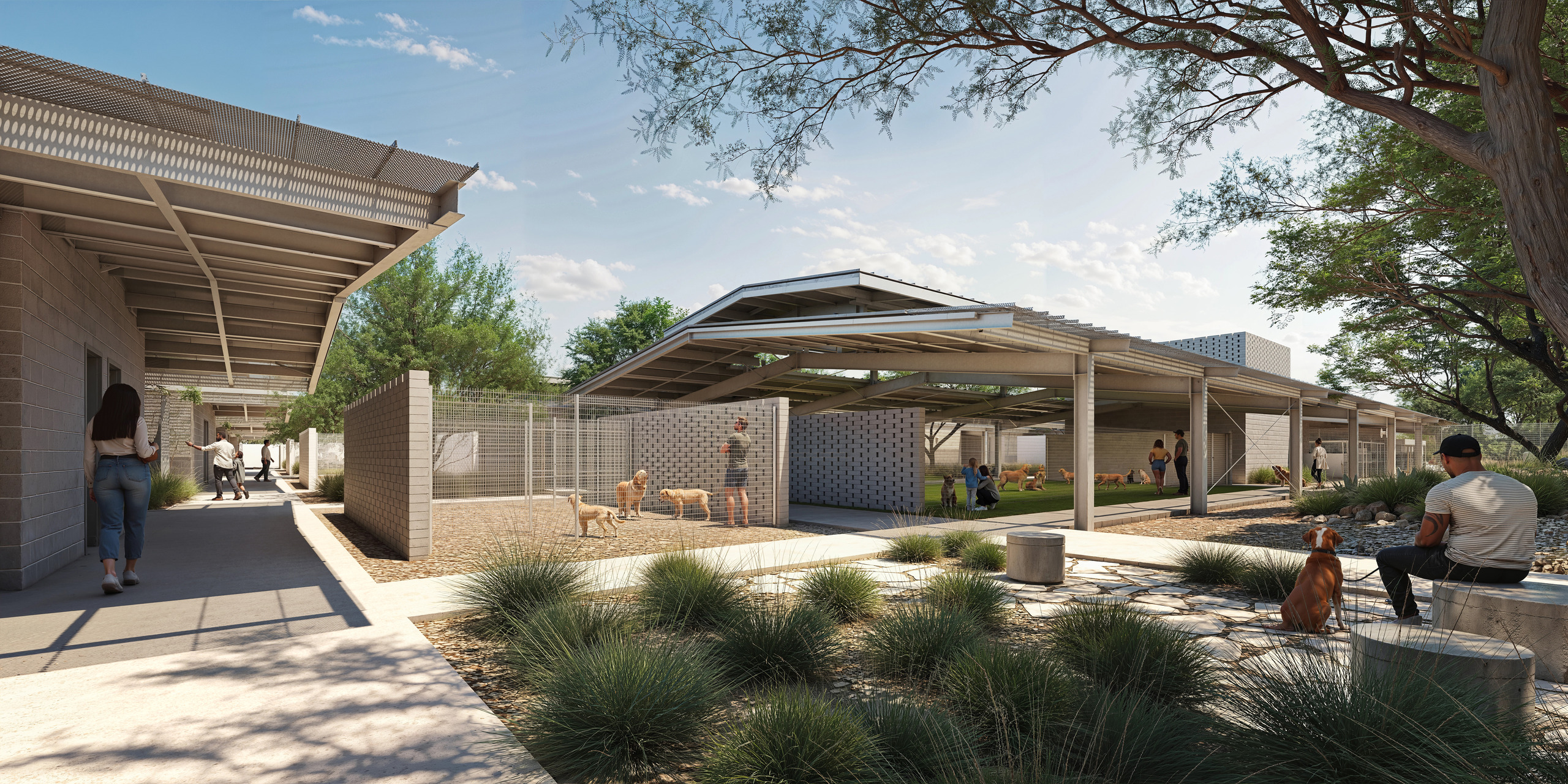
Rather than encapsulating everything in one large building, the design approaches land as an instrument of care. By spreading the program across the site, the facility creates access to daylight, air, outdoor space, and separation between kennel runs—conditions that support animal wellbeing while also improving the safety and ease of care for staff and volunteers.
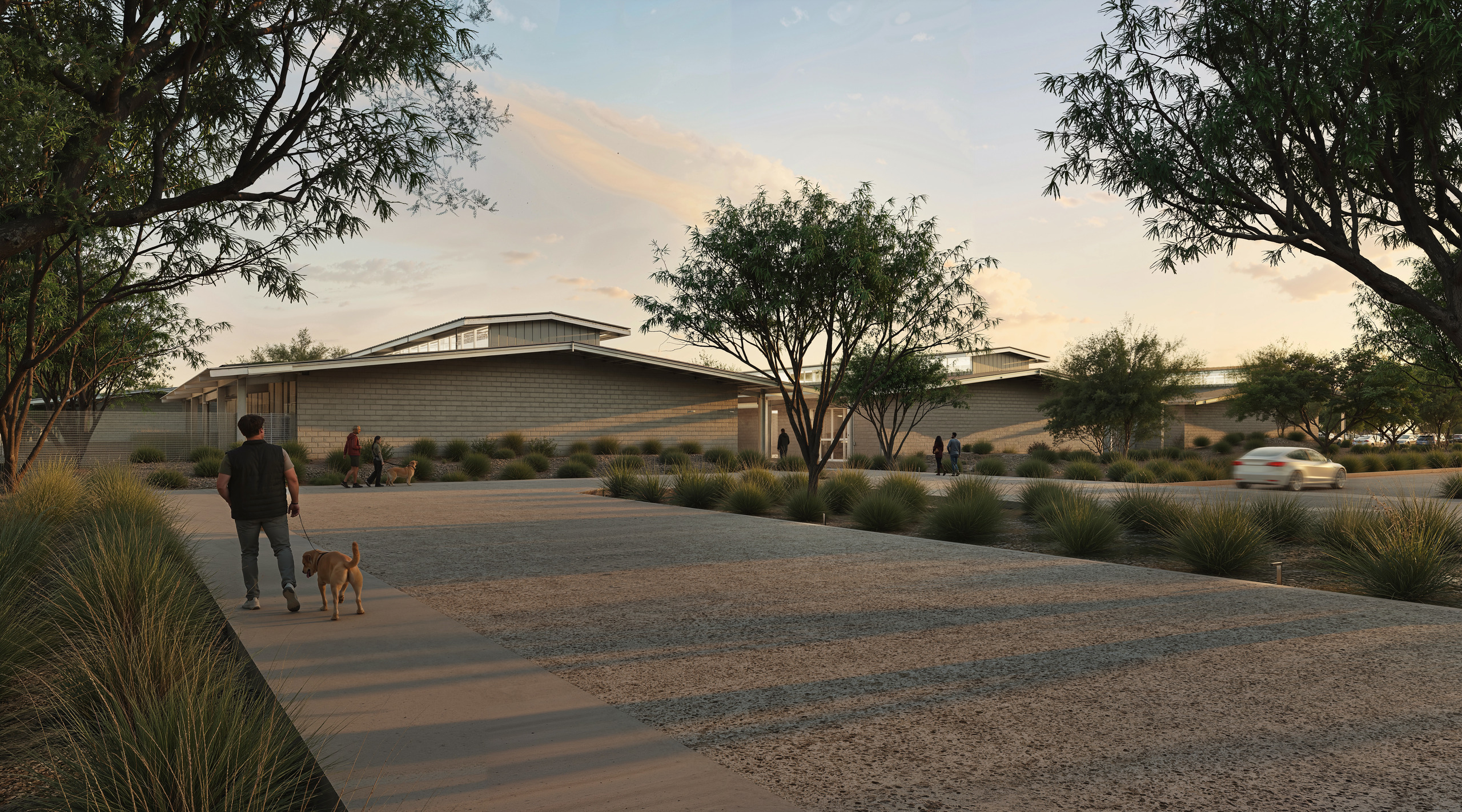
The architecture takes cues from the surrounding landscape and the long-standing logic and efficiency of barn typologies. Gabled rooflines, shaded overhangs, and clear stories lend the buildings a familiar, pastoral character, while the overall composition reflects a practical response to climate, program, and scale.
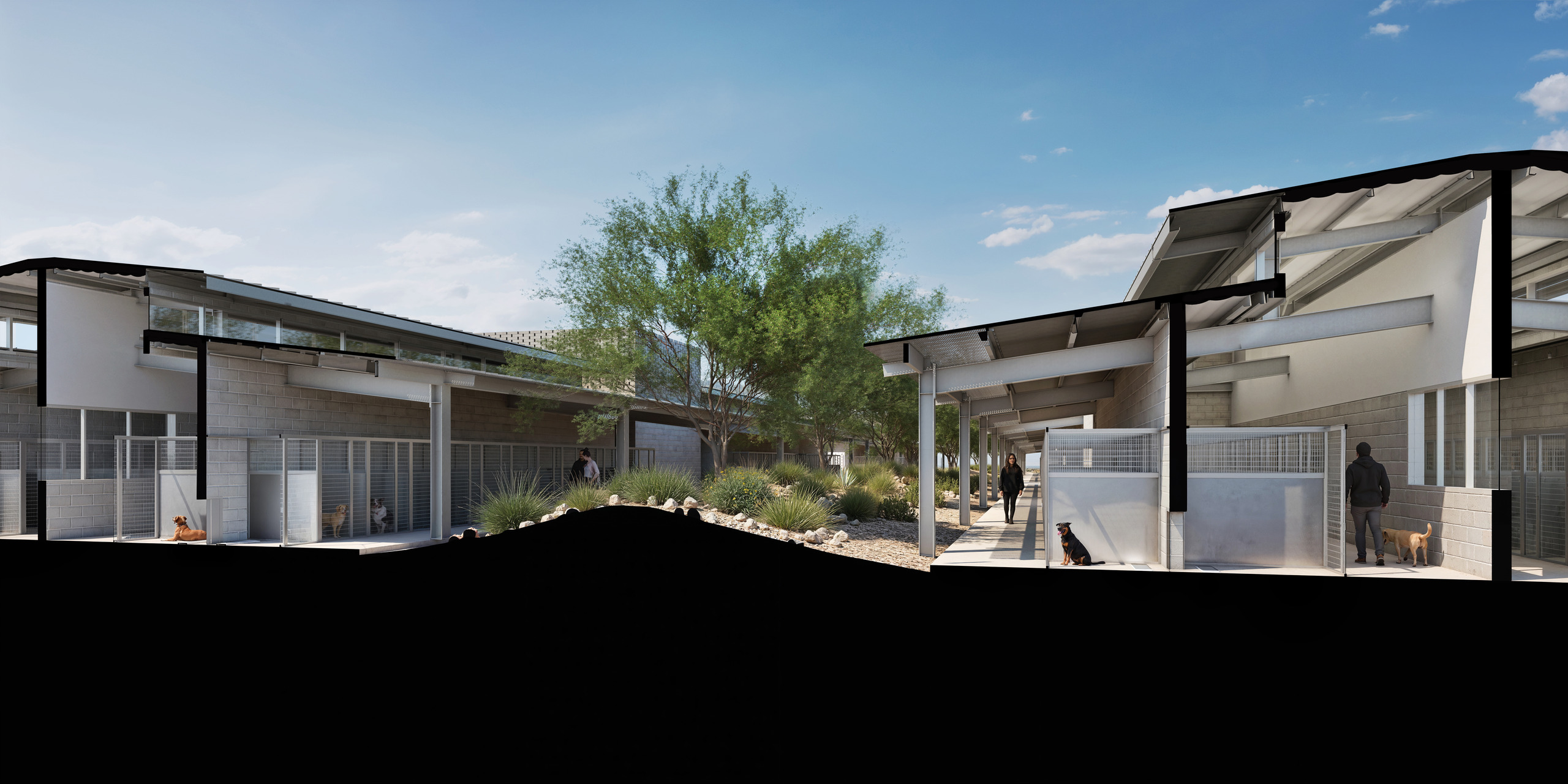
Between the buildings, the landscape becomes an active part of the infrastructure. Gentle mounding, grasses, and tree planting establish privacy, reduce visual stress between dogs, provide additional shade for the kennel buildings, and create a more humane field of movement for both animals and people. These outdoor intervals do more than shape the site; they become part of the care model itself.
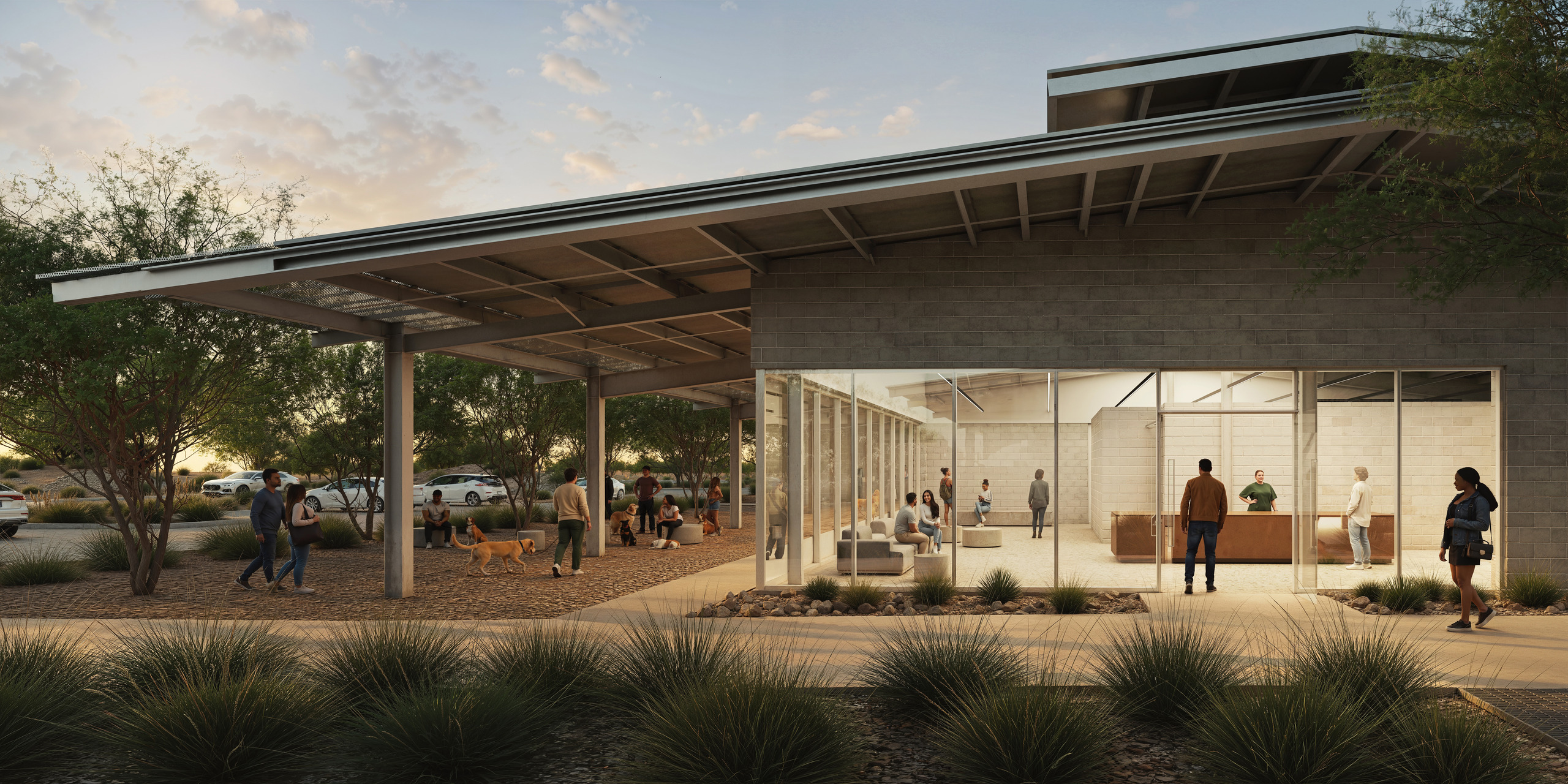
The facility functions as a headquarters for county operations where administrative spaces, public lobbies, intake and adoption areas, foster and release functions, a full veterinary clinic, volunteer support, partner work areas, kennels, and service spaces are all brought together in one coordinated environment that supports the life cycle of animal care.
The project also reflects the realities of modern sheltering on a significant scale. At approximately 94,000 SF of enclosed space, with nearly double that in covered exterior area, the facility meets the demands of a growing animal population while maintaining flexibility for future operational needs.


