Play
Pause
2025 Best of Design Award: Interior—Workplace (Small) - The Architect's Newspaper
Photographer: Michael Robinson

The Patterson Family Foundation and Pandi Capital, the philanthropic and investment arms of the Patterson family, approached us with an uncommon challenge: to create a single headquarters that serves two distinct organizations while expressing a single, deeply personal legacy. Unlike other clients with established visual systems, this project began with no brand palette, and the visual and spatial language had to be developed from the ground up.
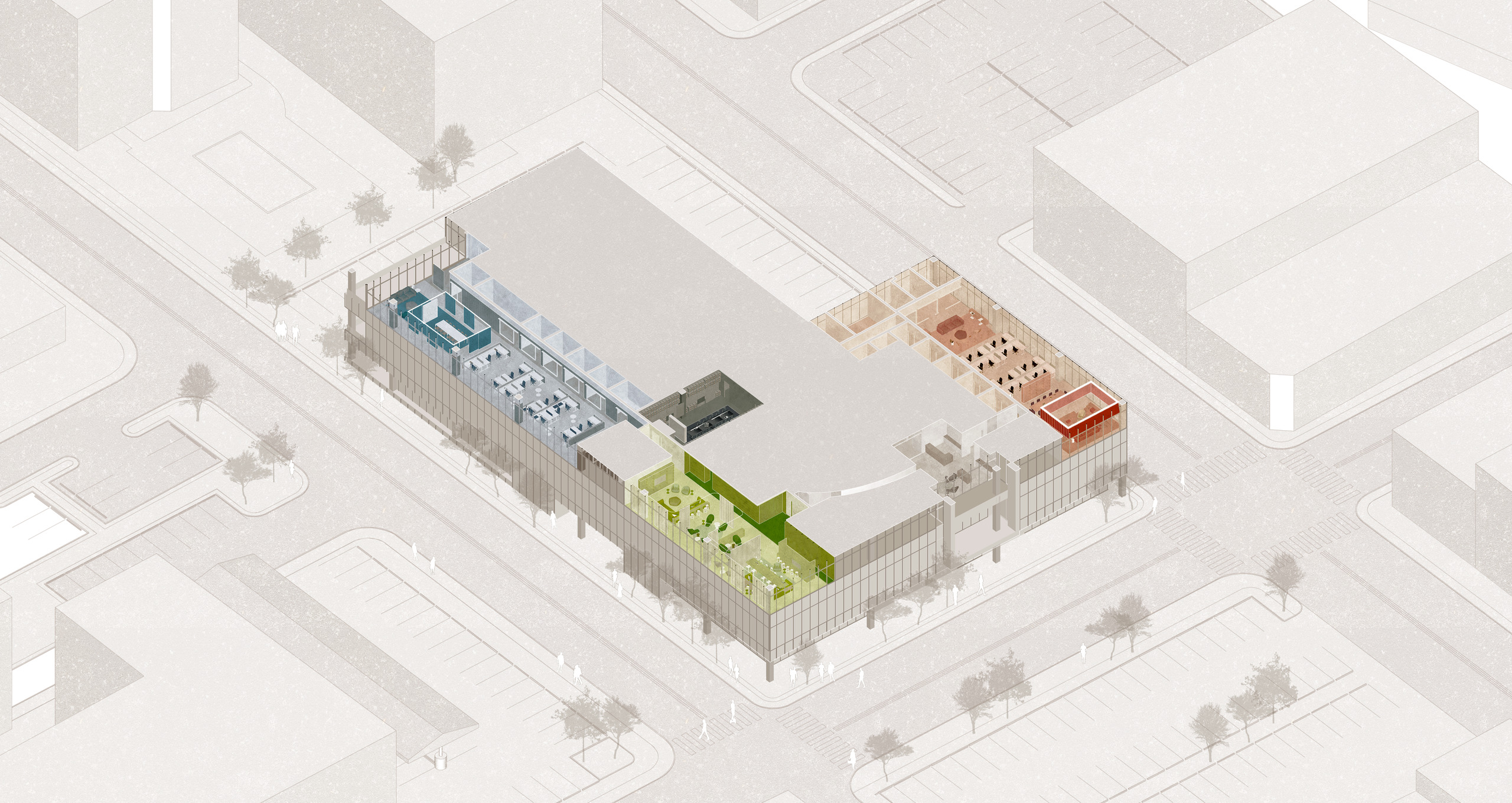
Our team began by designing and facilitating a visioning session to understand how the philanthropic and investment teams connect, where they differ, and what they share. This surfaced a clear spatial and cultural framework:
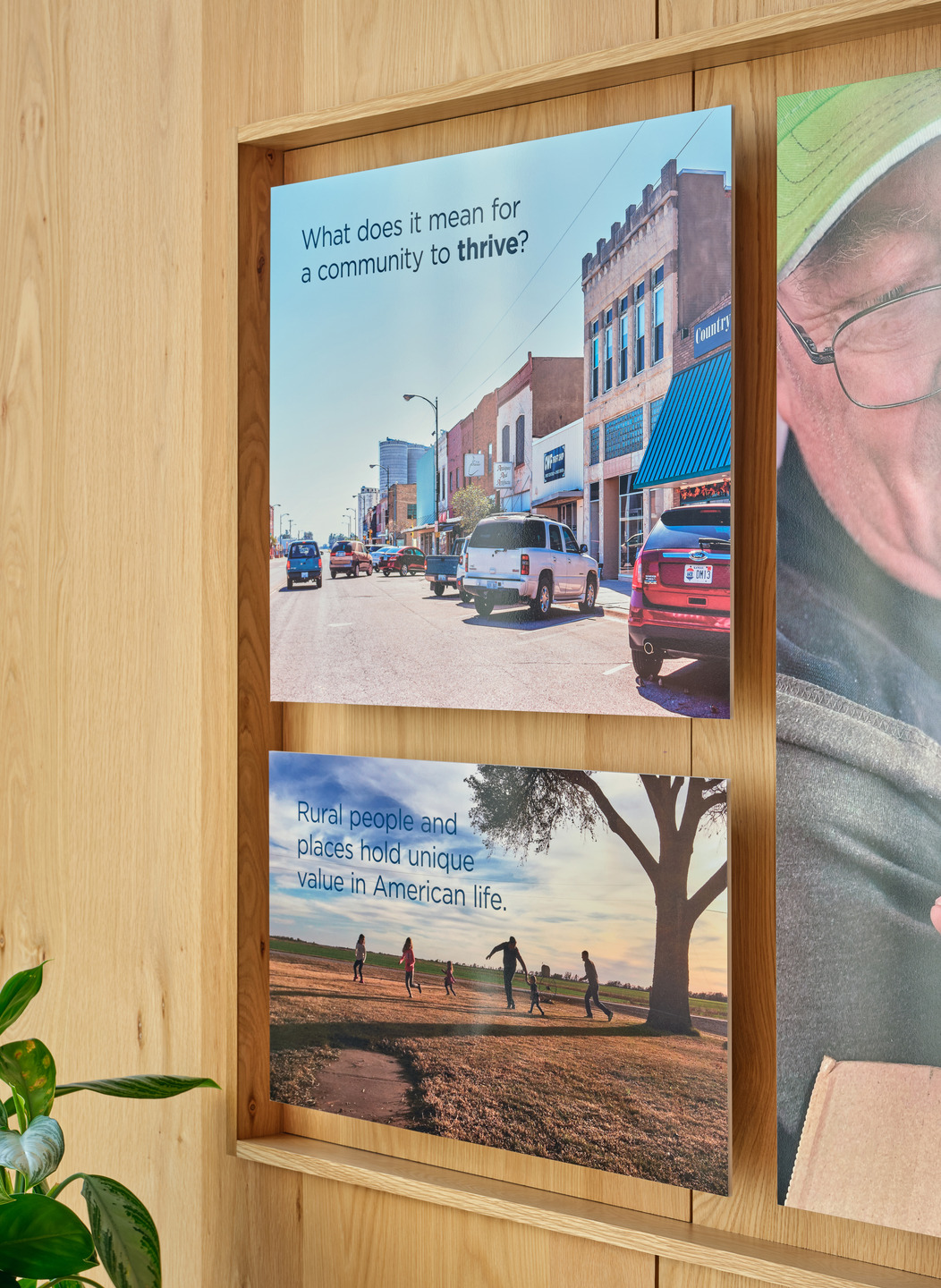
Red: Patterson Foundation — Warm, welcoming, community-forward, and intentionally approachable for grantees visiting from rural communities.
Blue: Pandi — Focused, analytical, refined—a home for the investment team responsible for sustainably growing the foundation’s endowment.
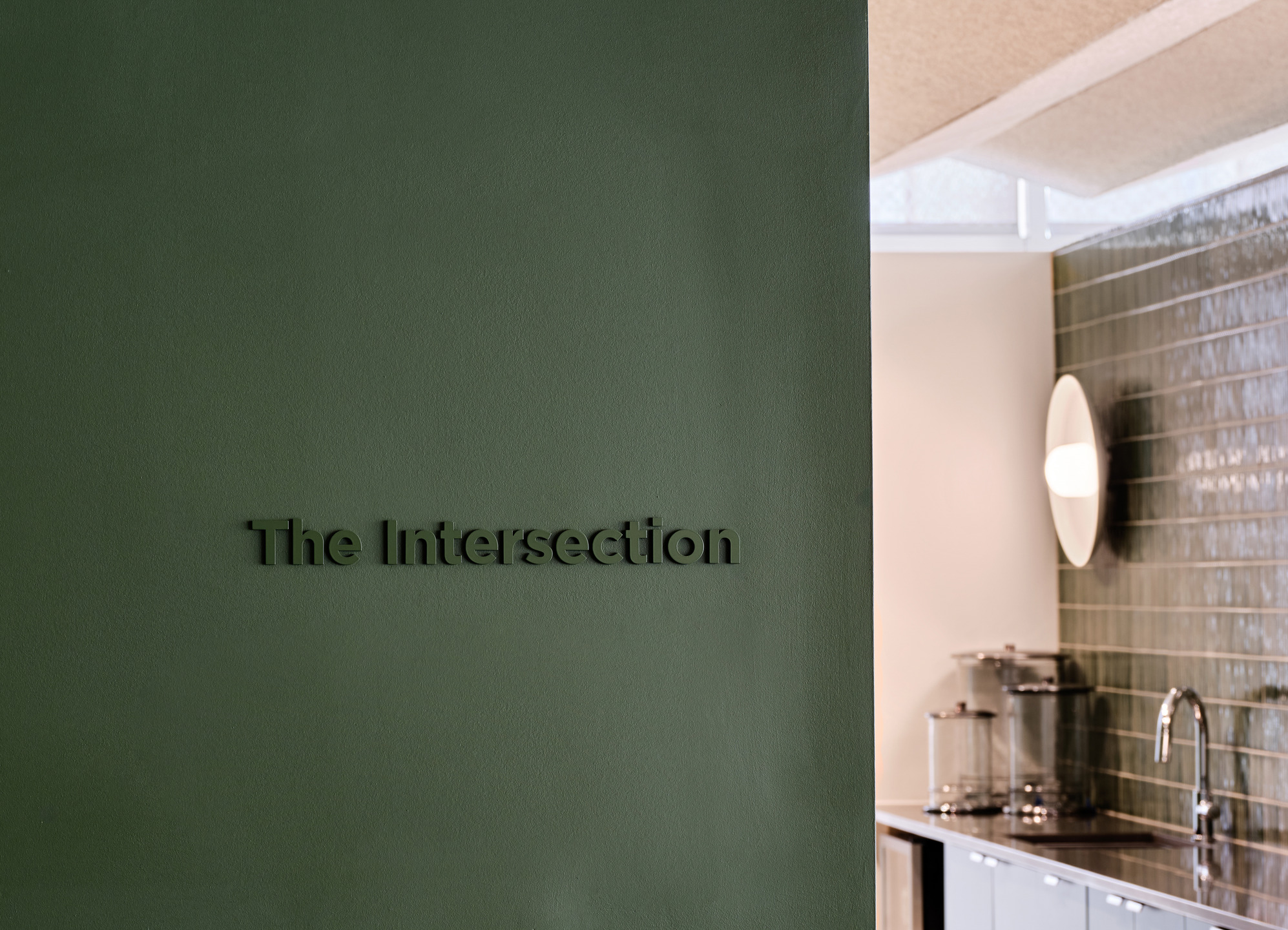
Green: The Intersection — A literal and philosophical center where both groups overlap. This became the organization's shared space: a center for hosting partners and gathering around common goals.
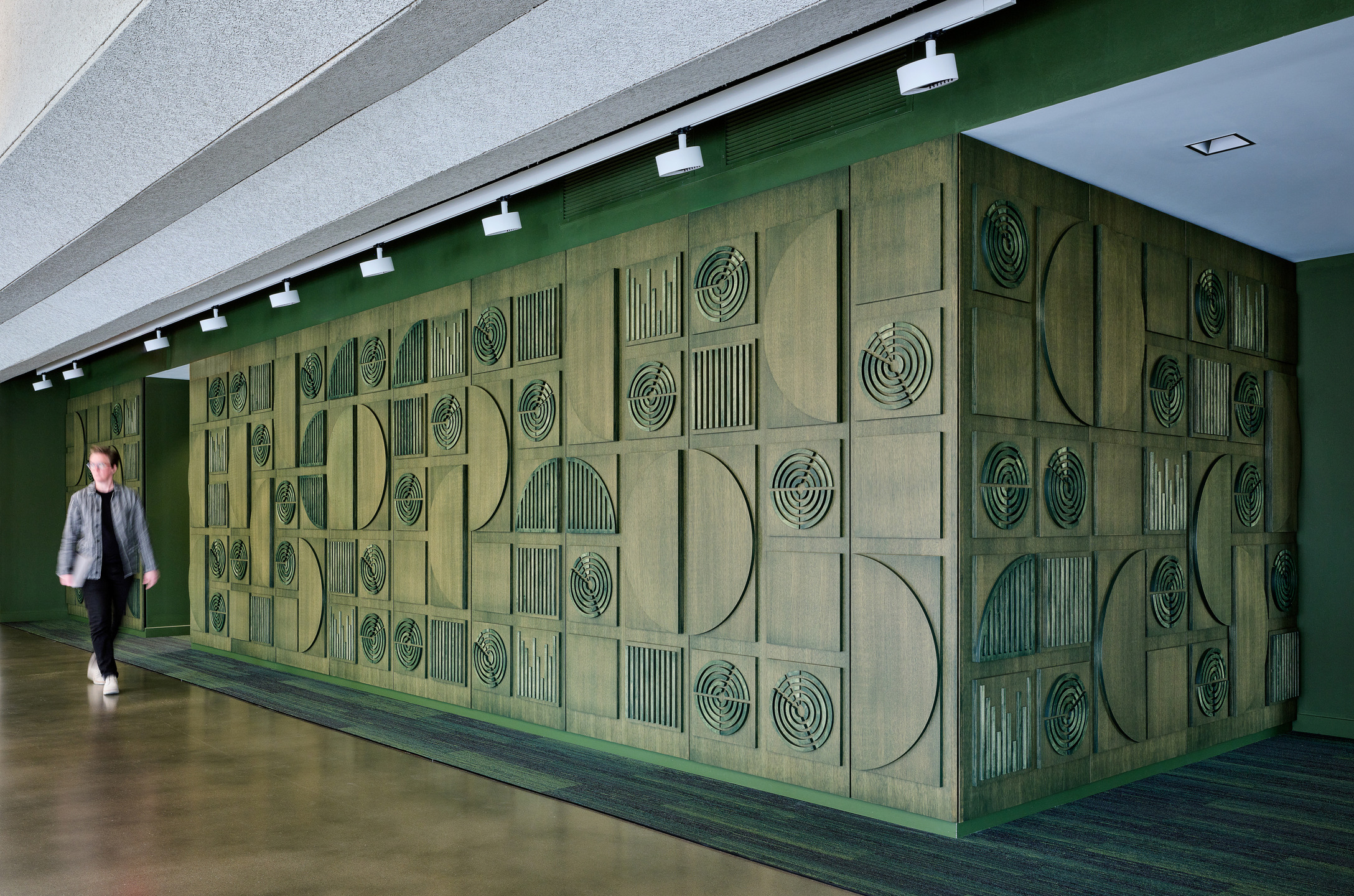
With no existing brand vocabulary to draw from, we created new ones. The most emblematic is the Growth Wall, a sculptural, wood-routed composition that reads in two directions.
From one angle, the Growth Wall depicts aerial farmland, a nod to the foundation’s rural focus and Neil Patterson’s agrarian upbringing. From another perspective, the wall illustrates data visualization, signifying bar charts and circular forms that speak to the analytical rigor of investment work.
This duality embodies the essential relationship between the two organizations: Pandi Capital grows the resources that Patterson distributes, ensuring long-term impact.
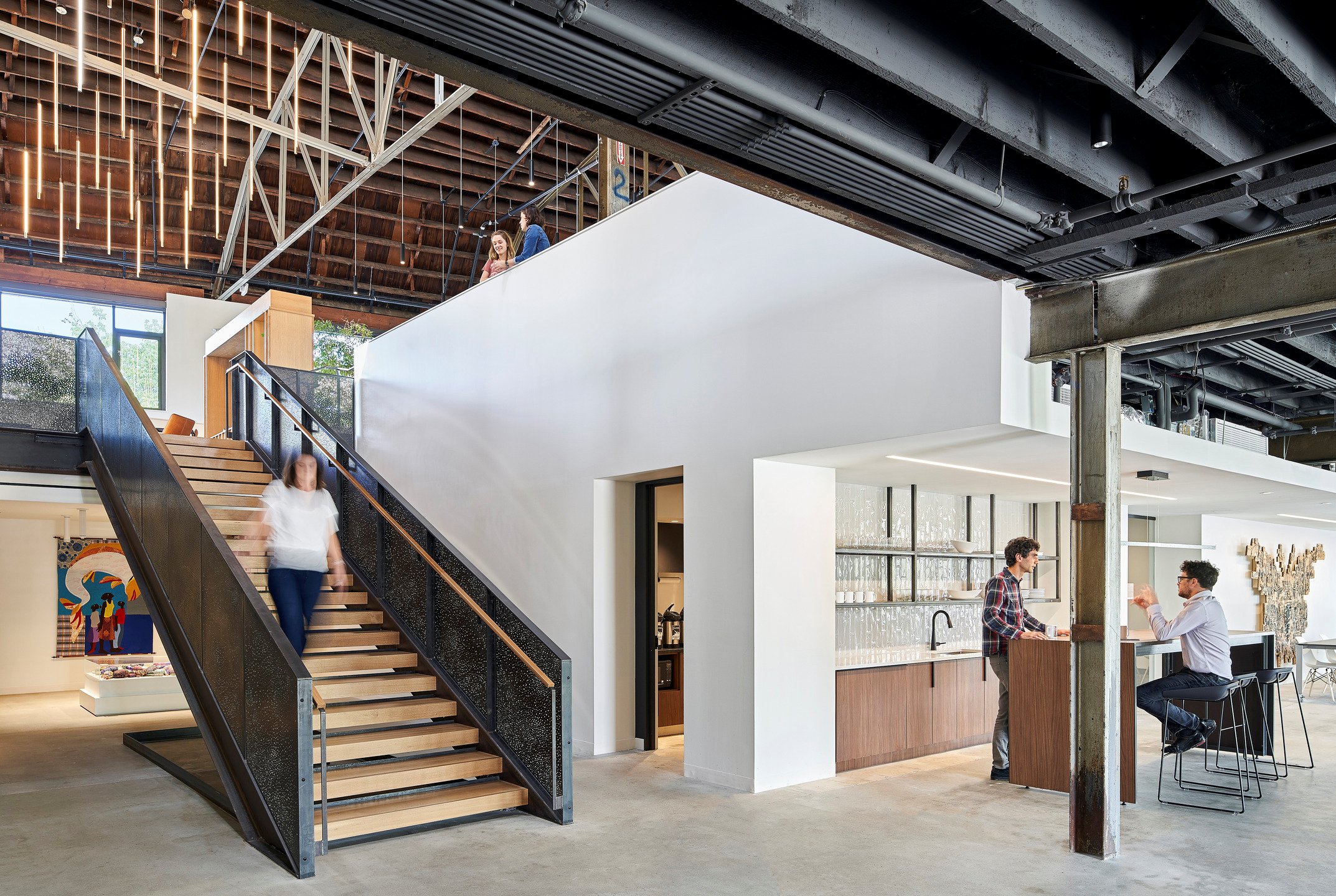
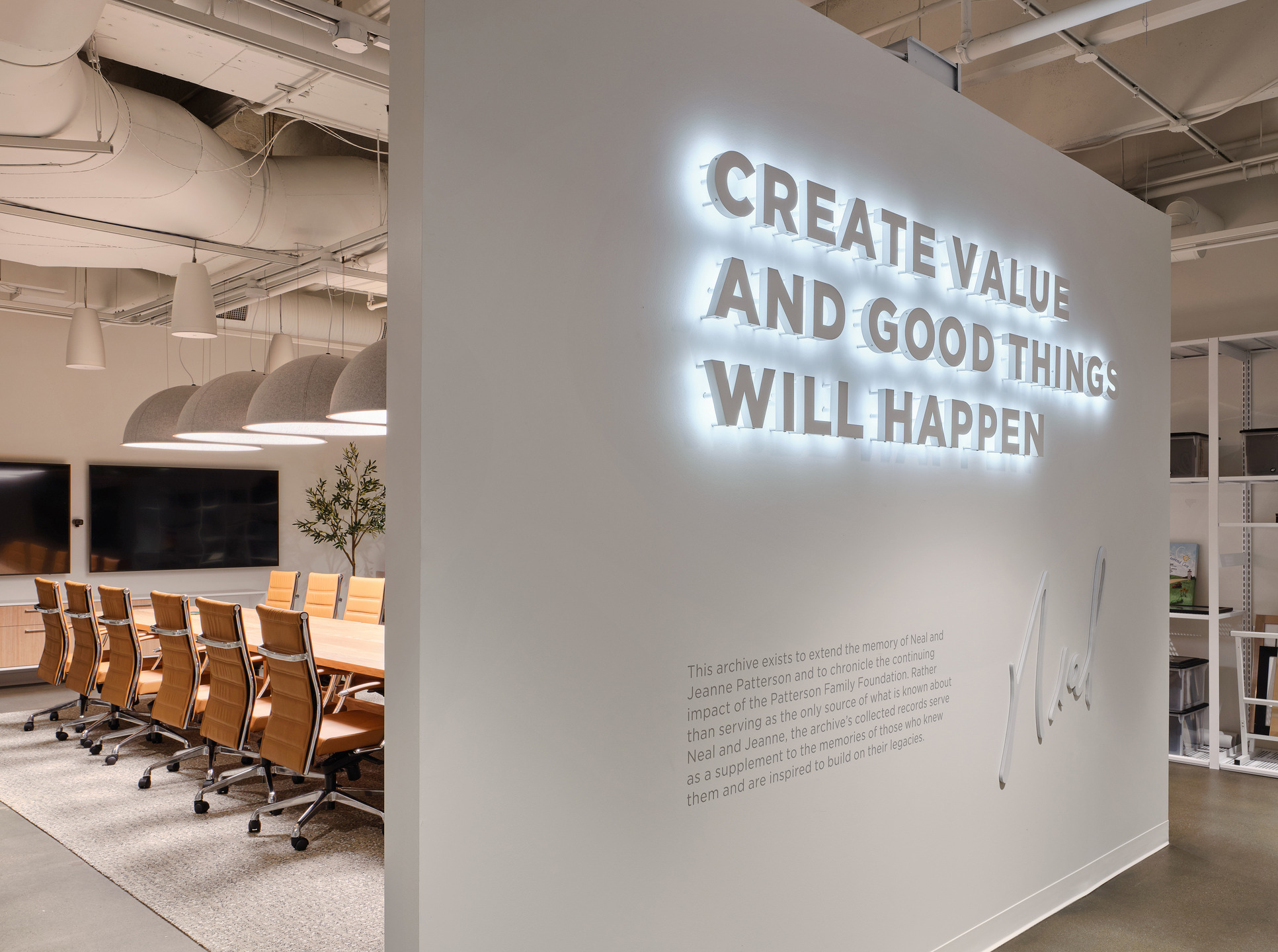
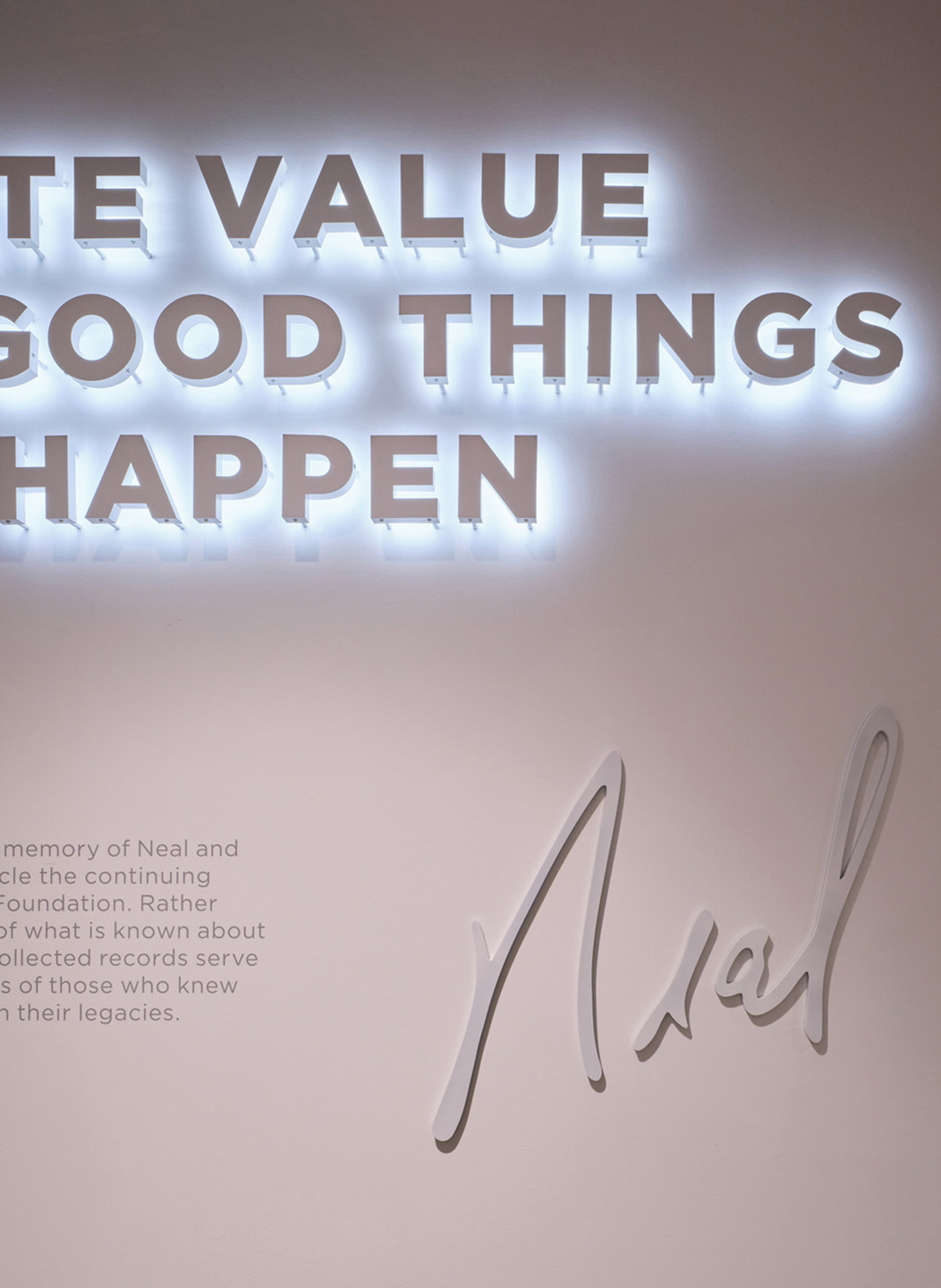
Much of the project honors the life and ethos of Neil Patterson, the visionary entrepreneur who co-founded Cerner Corporation, a Kansas City-based medical software corporation, alongside Cliff Illig and Paul Gorup. The front porch, a welcoming arrival environment, references the warmth of greeting someone at a farmhouse door, ensuring visitors feel fully at home.
The “One Last Round After Sundown” Wall, a rift-white-oak feature routed to resemble plowed rows, embeds a phrase central to Neil’s upbringing. It captures the ethic of persistence and humility that guided his childhood on a working farm and his business success.
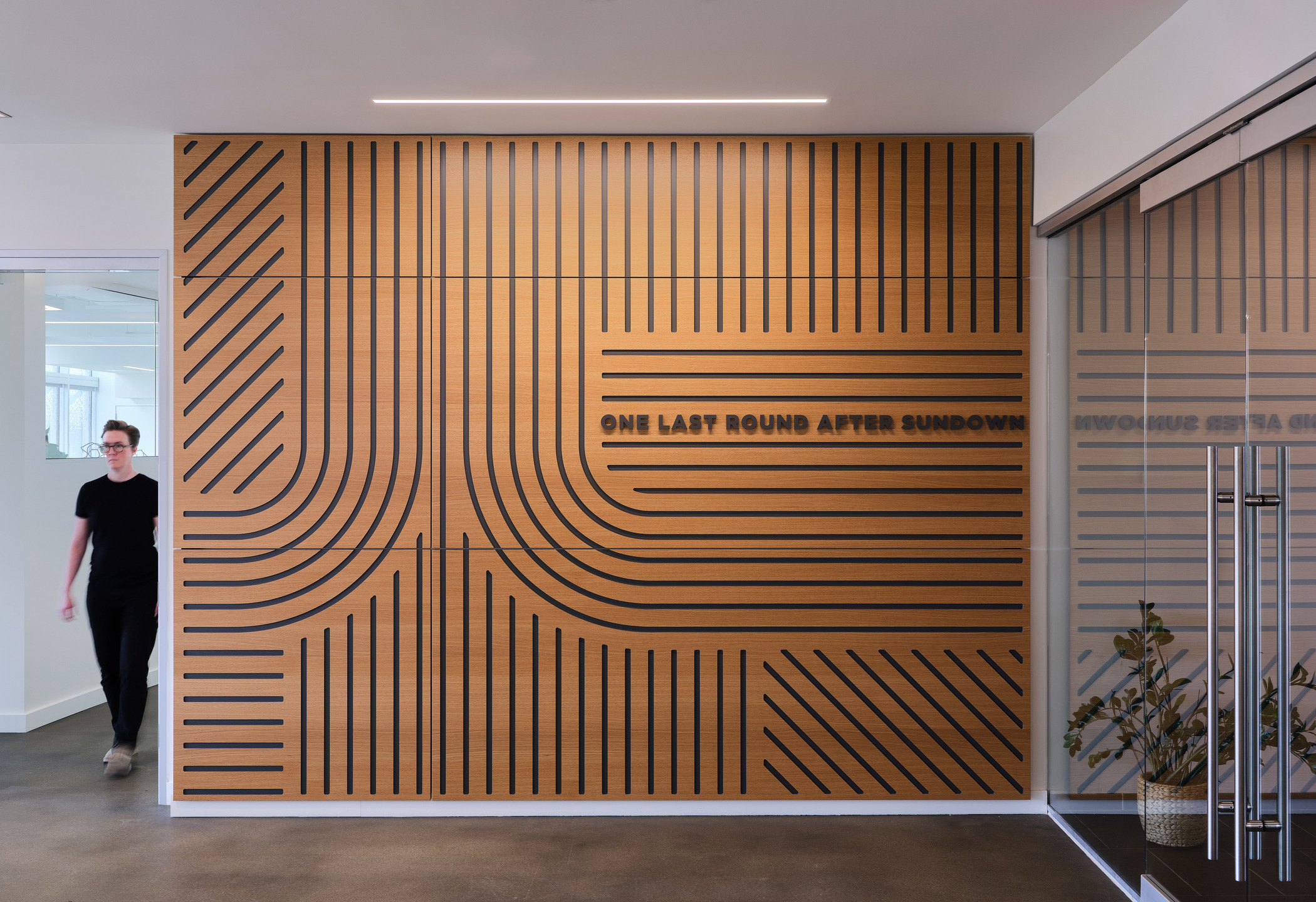
This project blurs the line between interior architecture and brand experience. The work succeeds because the disciplines moved together—materials, millwork, graphics, color, and storytelling functioning as a single system.
From the routed walls milled by custom fabricators to the refined detailing that carries across rooms, nothing here is off-the-shelf.
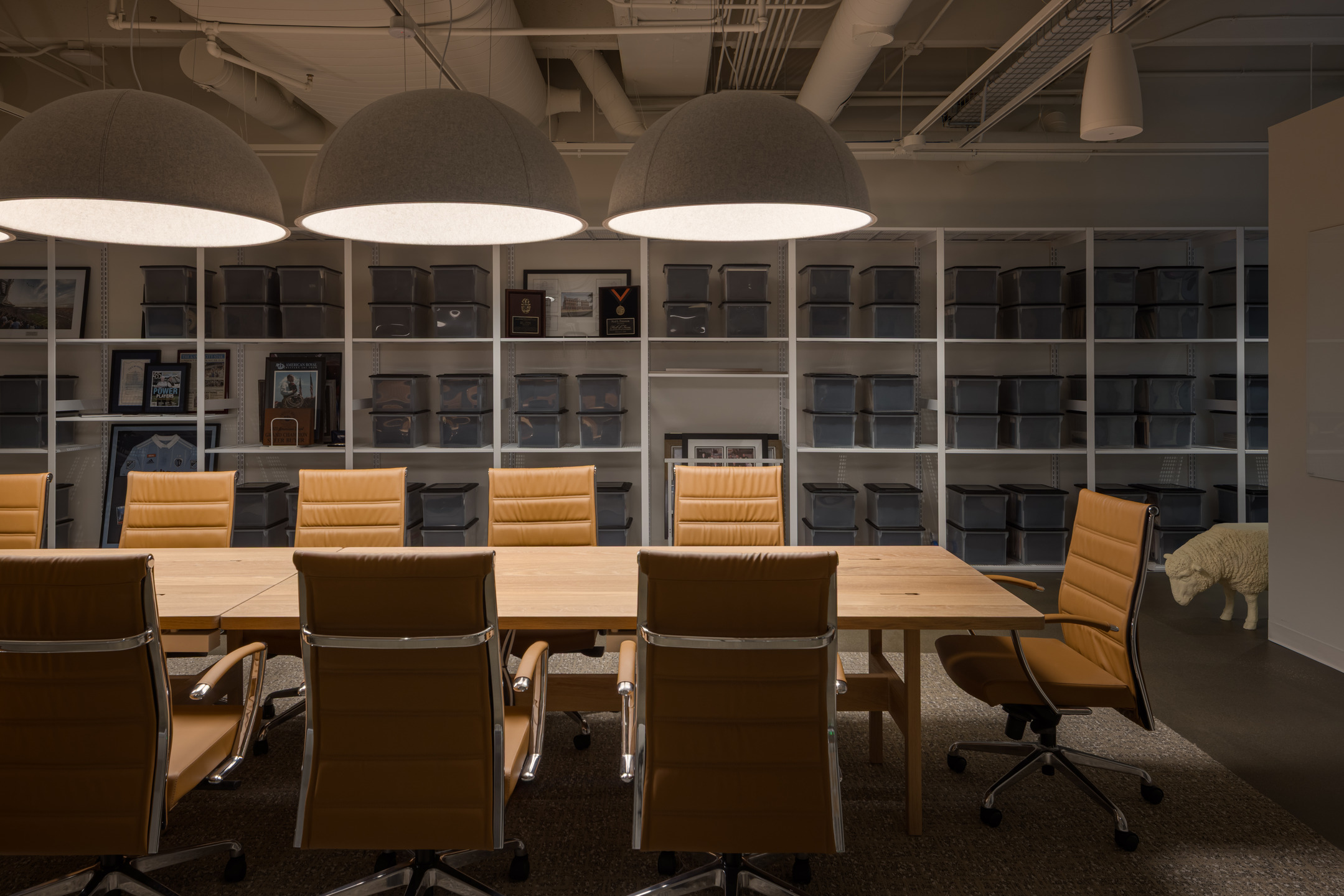
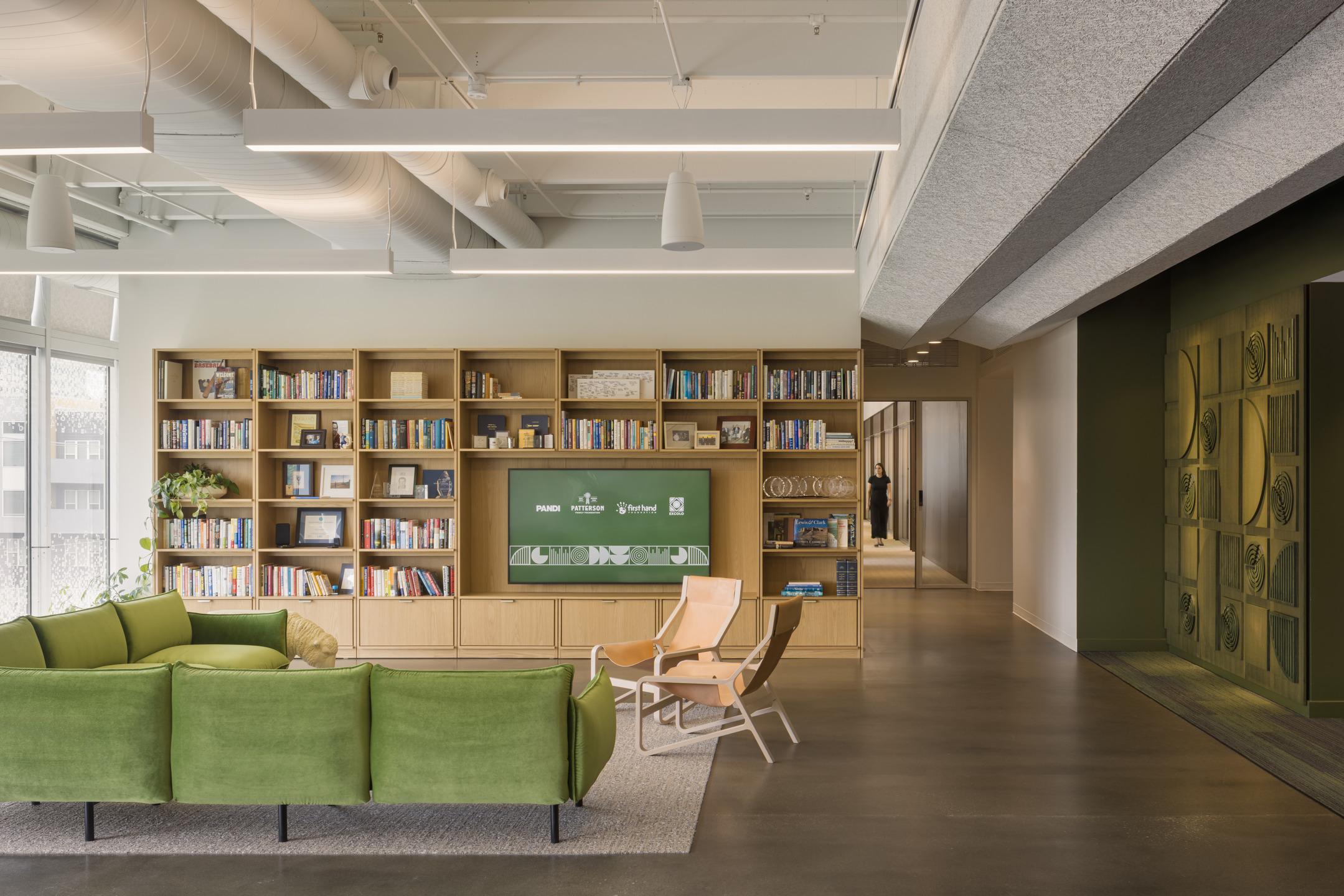
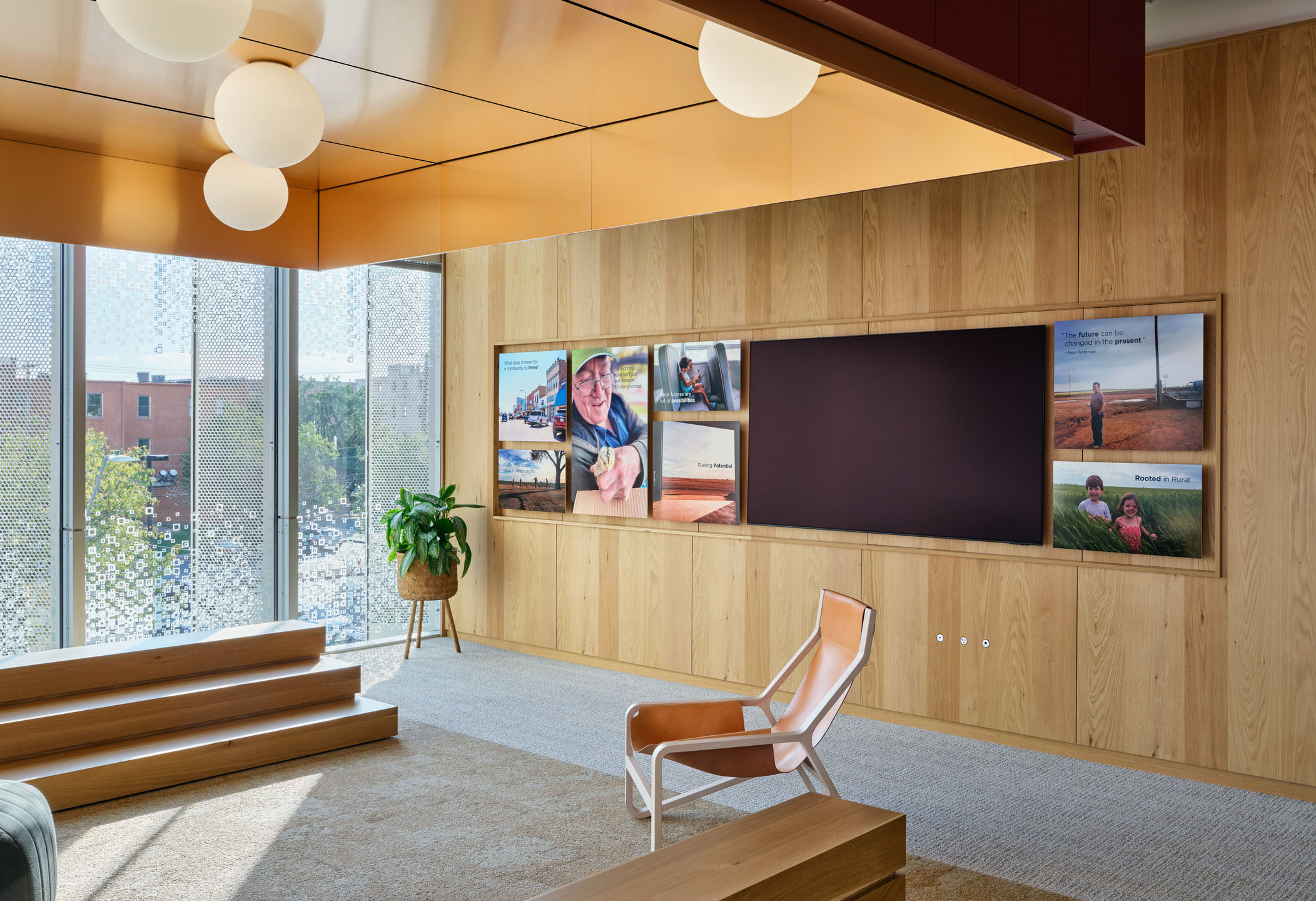
The program supports three primary audiences: foundation staff, investment teams, and the rural partners they serve. The zoning strategy—Patterson / Pandi / Intersection—clarifies how the organizations operate individually and together. The Intersection serves as a shared hearth, hosting meetings, community convenings, and collective storytelling.