Indoor Air Quality and Workplace Outcomes

Multistudio’s research-based design practice is always studying how design can help our clients get more from their facilities in each of these dimensions of performance. Our research team conducts evaluations of workplaces across the country to provide our clients with data-driven insights about their projects.
We believe in this method so fully that we use the same research strategies for our own studio spaces.
Employers and employees both benefit from an environmentally healthy workspace. Designing for human health keeps employees feeling good and making the most of their time in the office. Those benefits extend to a company’s bottom line: Healthy spaces reduce time missed at work and lower annual operating costs.
In fact, the Environmental Protection Agency estimated that indoor air pollution accounts for over $45 billion dollars in lost productivity annually. Using tools like the WELL building certification, Multistudio studied how design can reduce air pollution in our own offices.
Multistudio’s New Orleans office moved locations in 2024, providing the perfect opportunity to explore air quality improvements through a research-driven approach. Our team collected data before and after the move from employee surveys and indoor/outdoor air quality measurements.

Our Post Occupancy Evaluations (POEs) leverage this pre-to-post measurement format to better visualize the effects of the space by understanding how the new design compares to the pre-existing facility.
Ultimately, we found that the new space dramatically improved our team’s daily work experience. Compared to pre-occupancy measures, employees reported improvements to their ability to collaborate (+13%), their overall workplace engagement (+46%), and their work productivity (+47%).
A thriving workplace must also sustain employee health and wellbeing. Our measures of studio air quality showed that intentional environmental design choices can keep fresh air circulating without particulates or other pollution. Research shows protection from small size particulate matter (ex: PM2.5) should focus on keeping outdoor sources from entering the facility.
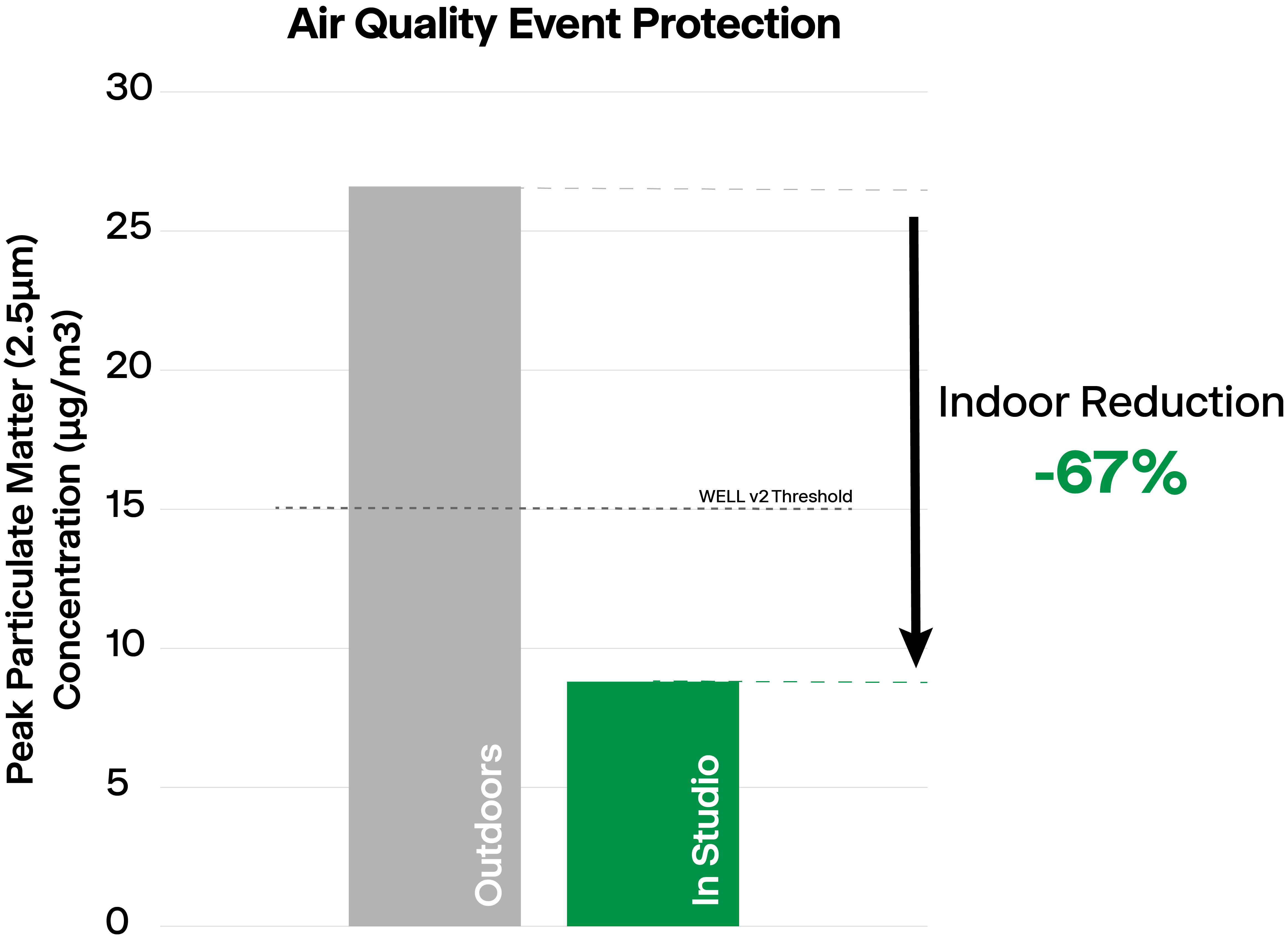
Using paired measurements of indoor and outdoor air quality, we improved the facility’s performance with a reduction in PM2.5 of 67% in the workplace. These measurements represent performance far beyond the WELL PM2.5 threshold for healthy air, as illustrated in this graph:
Our high-performance studio in New Orleans is intended to be a place that brings people together. We designed the new space to connect Multistudio team members with each other, our clients, and the regional community.
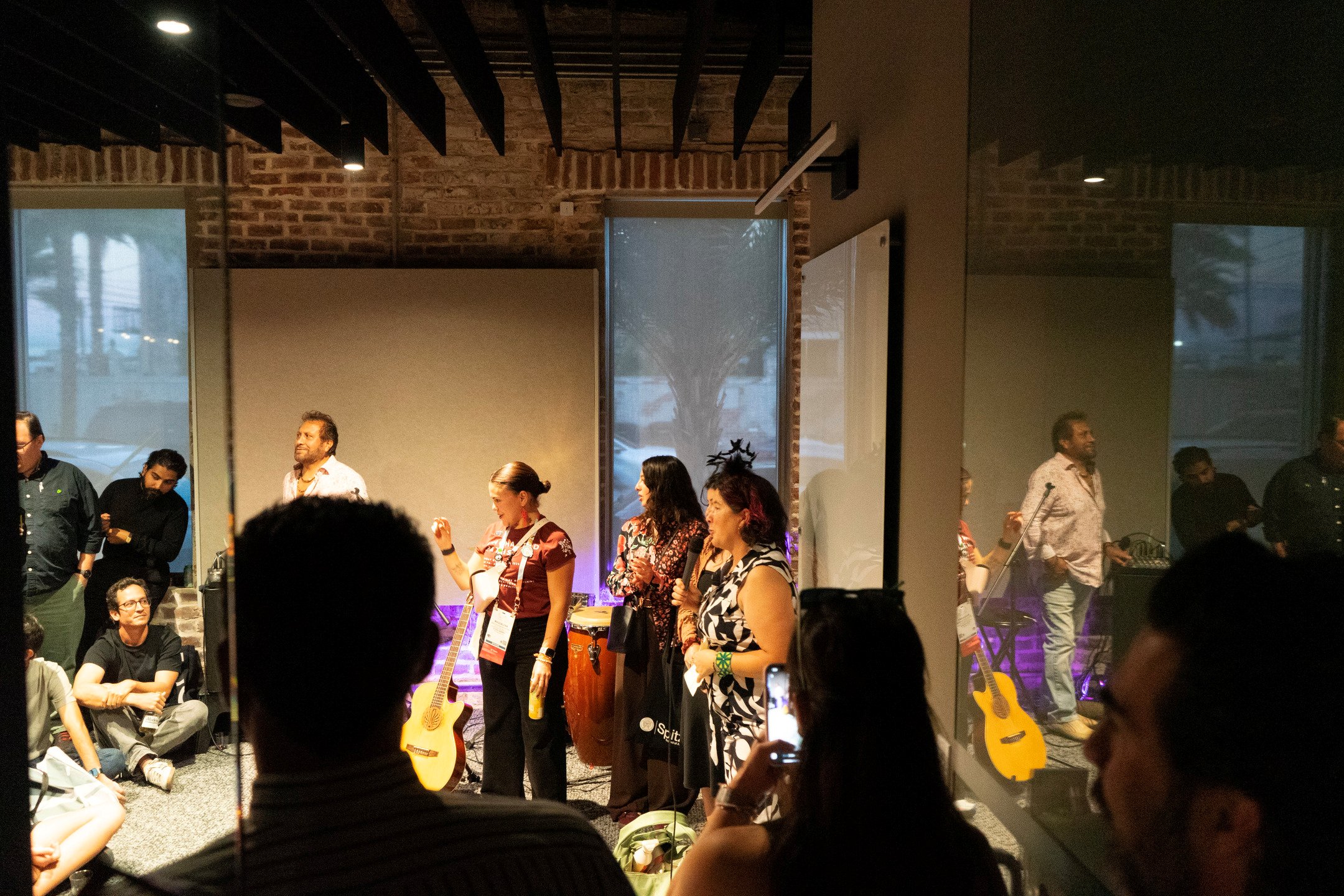
In 2025, we hosted academic events like “Property + Materiality,” a workshop by The University of Southern California’s Ethnography Studio and industry meetings like El Merequetengue, a collective celebrating Latin American landscape architects.
Managing Principal Martin Torvrea reflected on the impact of hosting these community events in the new studio, saying, “We had great food and music, and it was a wonderful event. The space flows well and allows the intention of our studio to be fulfilled.”

What we learn through dialogue with partners and collaborators inspires us to be more creative in how we can create workspaces for the future, and our data-driven research allows us to study these ideas with precision and rigor on a daily basis.
“Having those more dedicated and intentional spaces has been huge in terms of how we design,” Vice President Elaine Damico explained. “It gives us more opportunity to collaborate with each other and our clients.”
“We often use the spaces in our studio as case studies,” she continued. “Our clients can come in to see different approaches to meeting and collaboration spaces. Our new studio allows us to work in a collaborative mindset.”
Multistudio's research in our own offices shows that we don’t have to choose flexibility or performance – we can pursue a design that excels in all the metrics that matter for our team.
