Architect Galen Lif is Designing Missouri’s Scientific Future
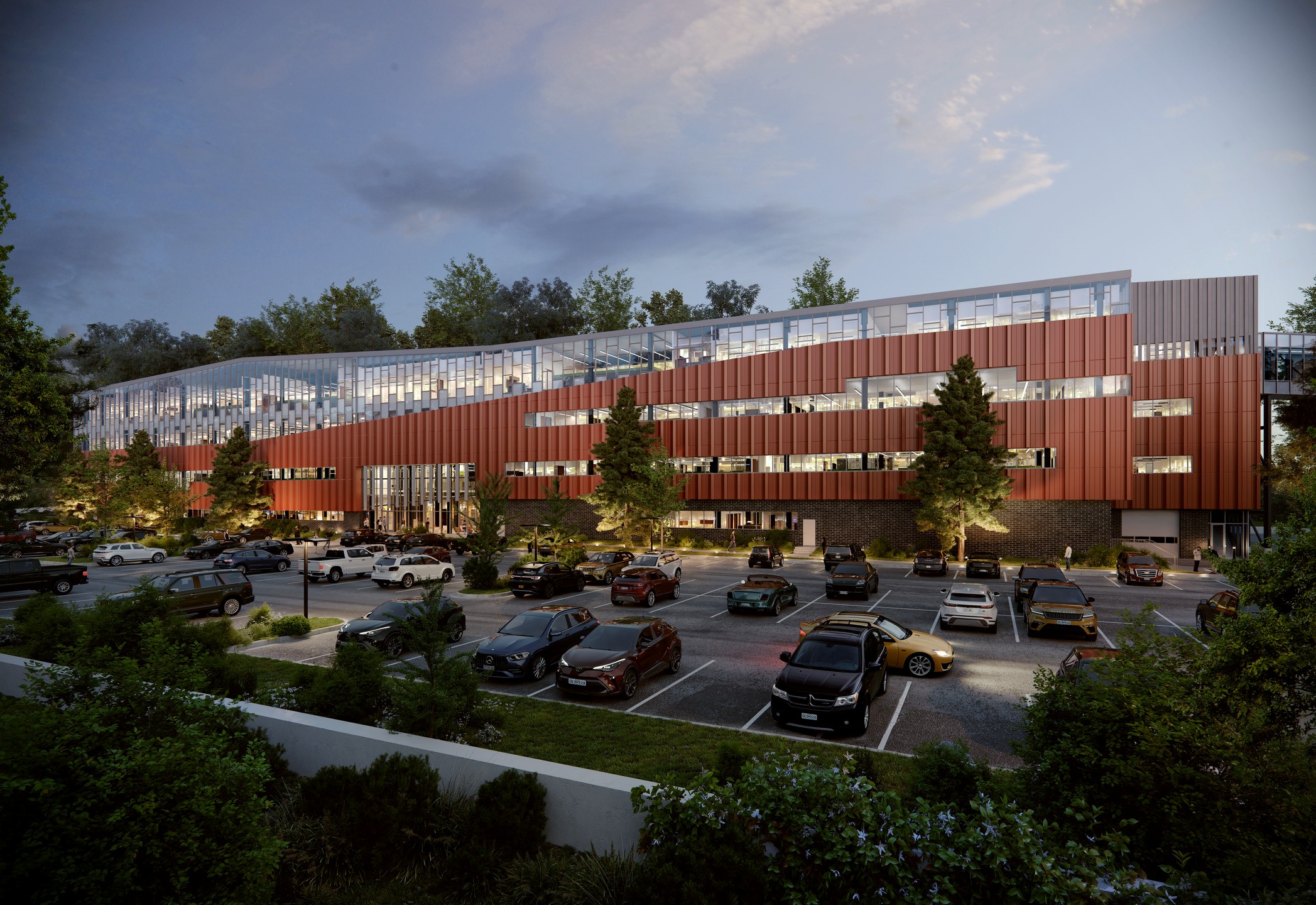
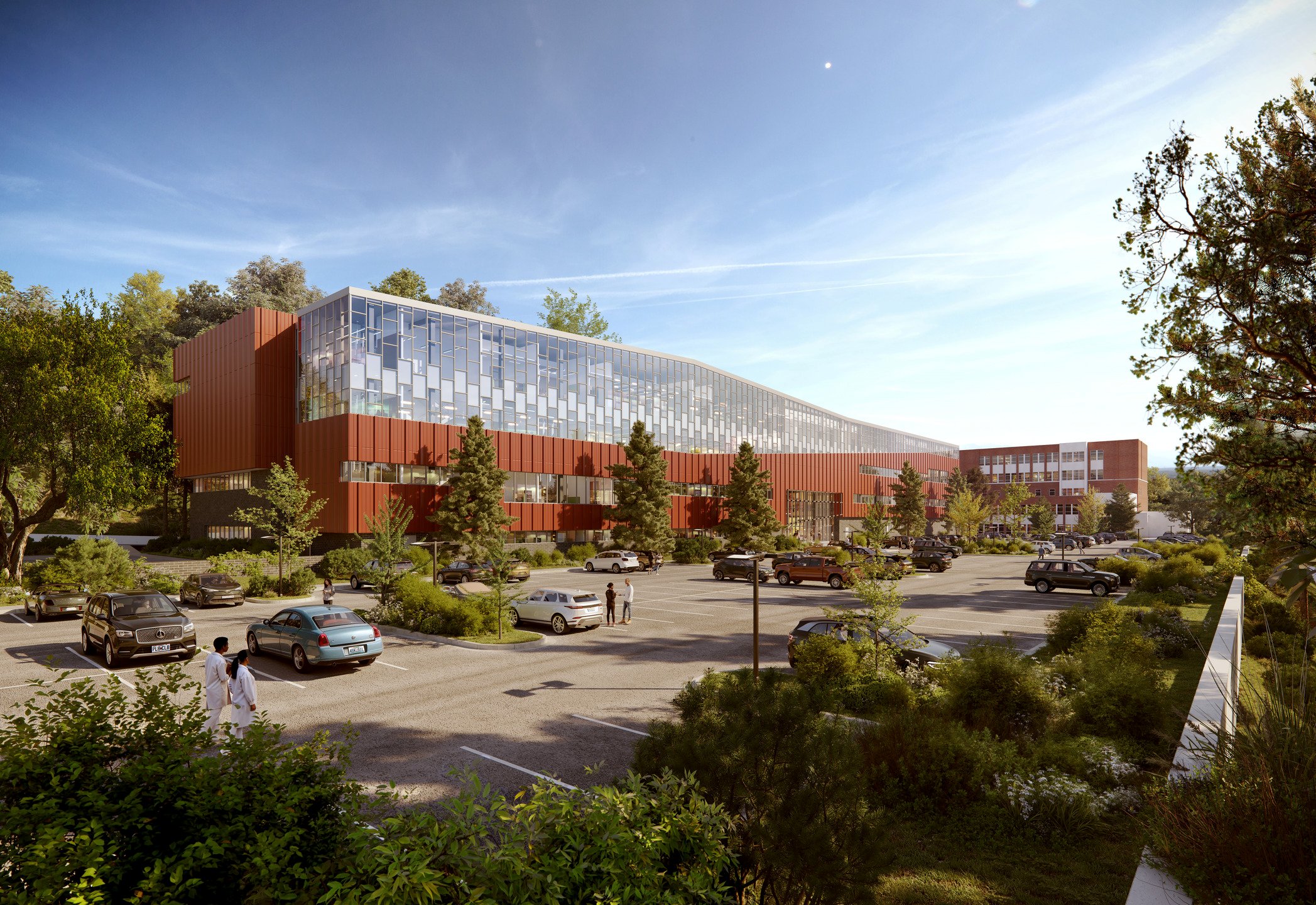
Galen is leading work on the State of Missouri Multi-Agency Laboratory Campus in Jefferson City, which will house five state agencies, including the Department of Health and Senior Services, Department of Natural Resources, Department of Agriculture, Department of Conservation, and the Missouri State Highway Patrol Crime Lab Division.
The multi-story building provides ample space for each agency to stretch, while also offering collaborative areas to promote an interdisciplinary approach to public health research. Innovation, sustainability, and security underscore all aspects of the design, from energy-efficient Mechanical, Electrical, and Plumbing (MEP) systems to cutting-edge access control and surveillance technology.
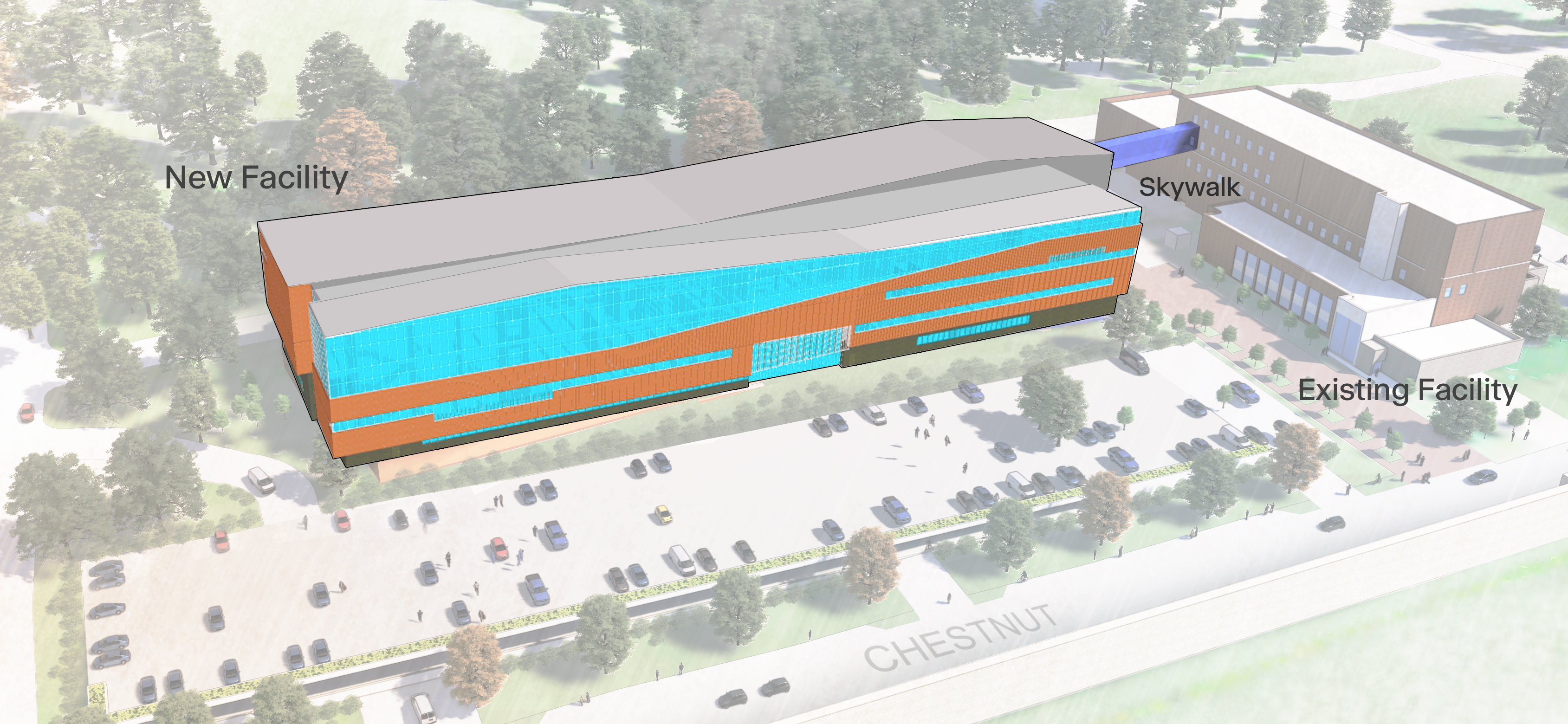
Scheduled to open in 2026, the campus contains 220,000 SF of laboratory facilities (BSL-1 and 2; including necropsy), offices, and shared common spaces. A 13,000 SF expansion of the existing public health laboratory is included in the scope.
Galen spoke with MaryBeth DiDonna at Lab Design News (LDN) about the scope of this project and how he strategically approached the design based on client collaboration and feedback. His responses have been consolidated below.
Galen Lif: Multistudio engaged the client in an eight-week programming effort where the designers and planning team met multiple times with each agency in order to determine their existing lab conditions, processes, and equipment used. This programming allowed our design team to understand the various laboratory types, equipment to be supported, and staff needs across agencies.
GL: Each of the agencies had very specific requirements, including one major requirement relating to the crime lab, which was intentionally kept separate from the other health agencies. This was crucial for establishing the reliability of evidence in future legal proceedings. Additionally, we needed to find a solution for all of the field equipment that the agencies use, for their hazardous waste accident response teams; their air, water, and soil testing; as well as collecting fish/wildlife to examine in the necropsy facility. The field work required specific programming, including a garage space for the emergency response vehicles, boats, and trailers that are loaded and often taken to the field.
GL: The Missouri Department of Conservation required a necropsy facility in order to perform post-mortem examinations on animals to determine the cause of illness and/or death, as well as evaluate tissue samples and other specimen types submitted to the laboratory for diagnostic evaluation. The facility needs to accommodate wildlife up to the size of a male elk, so we had to design a hoist and rail with 15-foot-tall doors on the exterior of the building as well as include space for special equipment.
It was important that the Department of Conservation’s labs and offices and the existing Missouri State Public Health Laboratory were connected to the new building in order to bridge its expanding newborn screening labs and other chemistry labs. We introduced a fourth-floor skywalk connector so that their staff could easily move testing samples to both buildings.
GL: The building incorporates energy-efficient MEP systems, heat recovery, chilled water cooling, water-saving plumbing fixtures (27.52 percent), and continuous exterior envelope building insulation to reduce its carbon footprint. The design has a 12.97 percent energy cost savings and 23.4 percent energy use savings compared to the IECC 2021 baseline for laboratory buildings. It integrates environmental control systems to maintain optimal temperature, humidity, and air quality levels as needed in each particular laboratory to ensure the integrity of samples and testing.
MEP equipment, N+1 redundancy on laboratory and fume hood exhaust fans, hot water boilers and pumps, water chillers, AHUs with heat recovery, full generator backup, and Uninterruptible Power Supply (UPS) functions are available for all critical lab equipment.
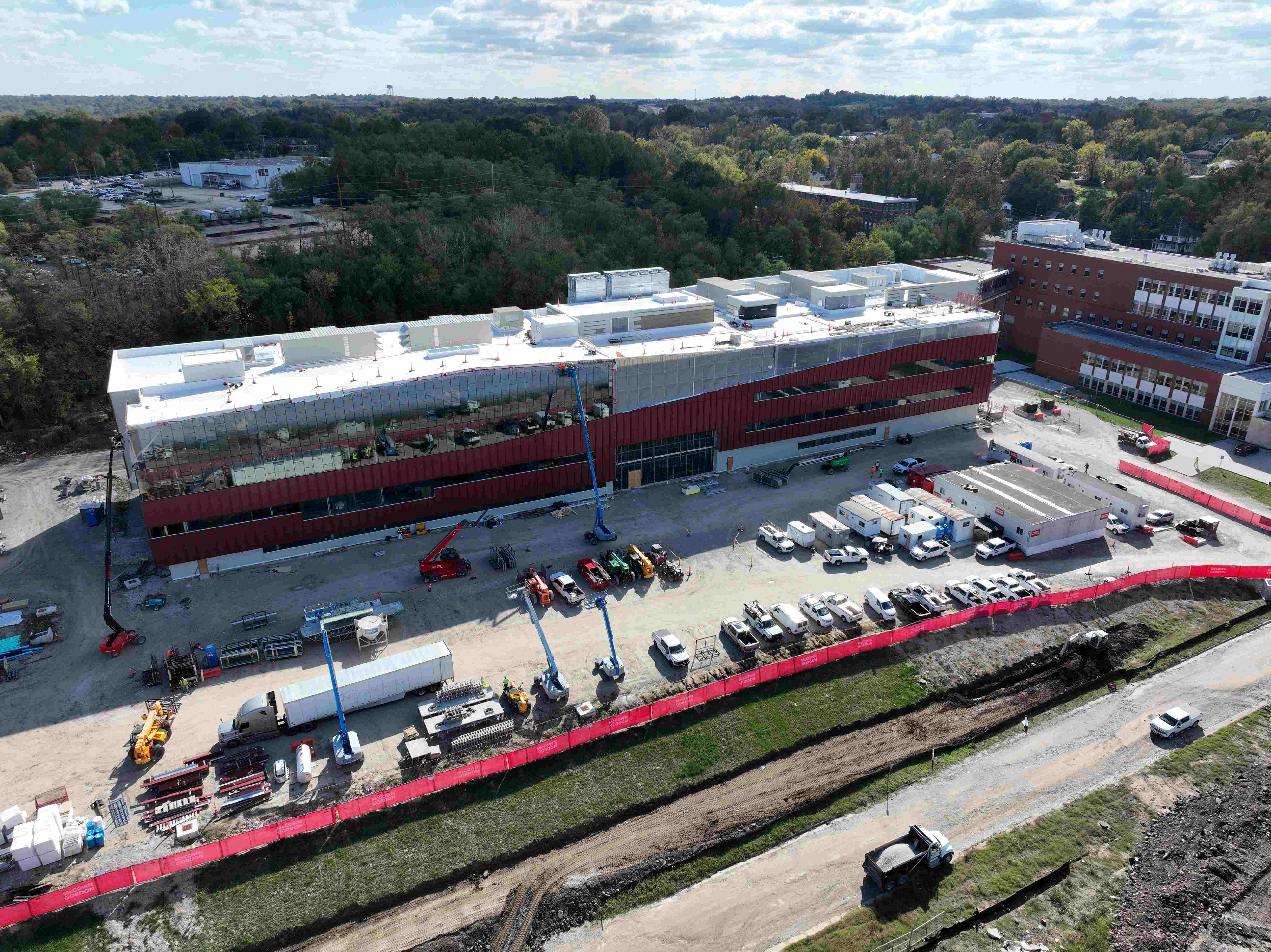
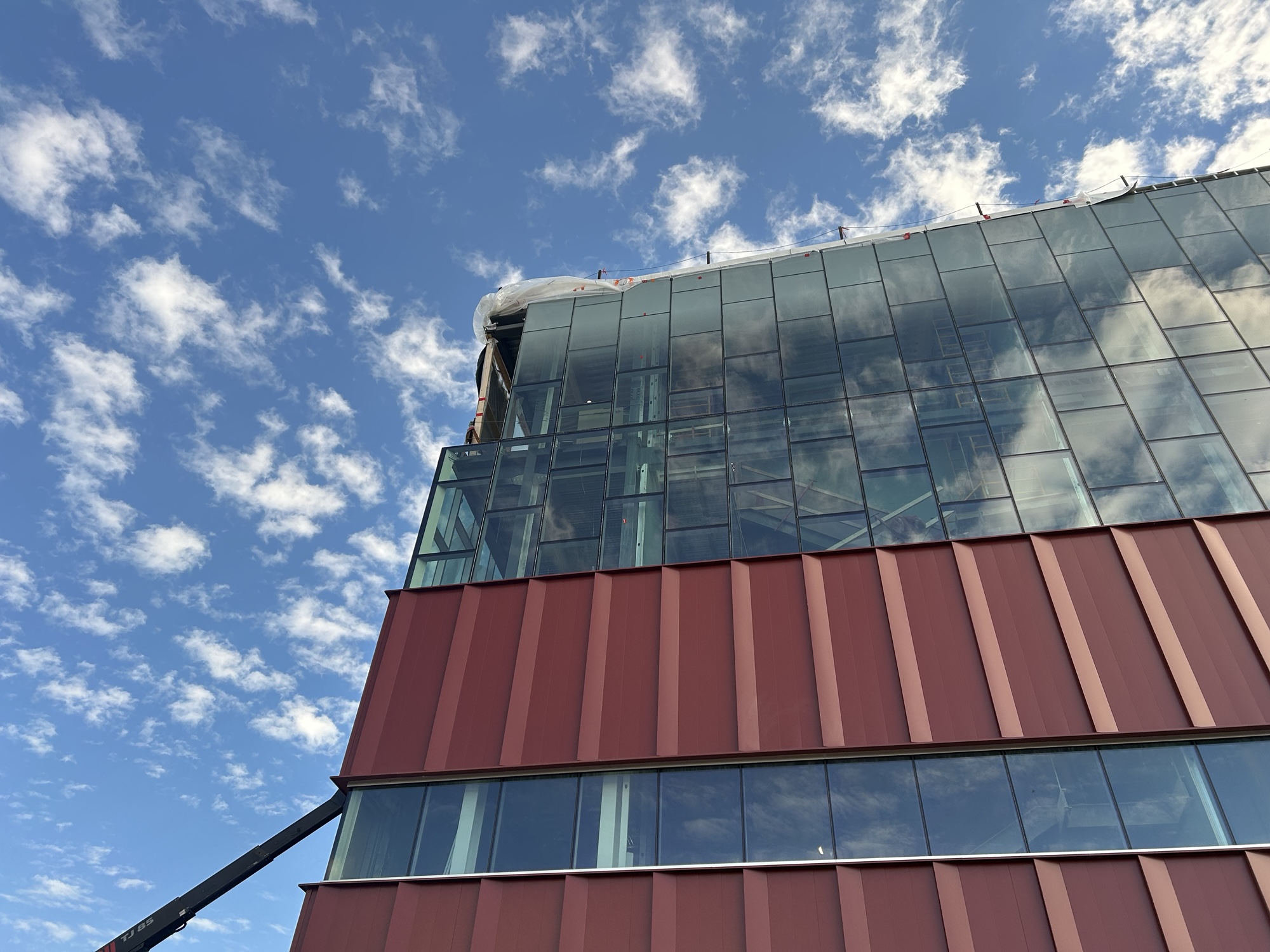
GL: The use of locally sourced materials—such as structural steel and materials used for glazing systems—was strategically balanced with the project's investment in advanced technological infrastructure and energy-efficient MEP systems.
GL: Most of the furniture and lab casework systems in the crime lab are designed with specialized features tailored to their specific functions. The labs were initially programmed using a modular approach, then refined as specific equipment needs were identified, such as electron microscopes, DNA sequencers, mass spectrometers, and high-performance computing clusters to support and facilitate complex experiments and data analysis. All systems were carefully coordinated with flexible, modular bench design and adaptable MEP infrastructure, allowing the spaces to evolve alongside emerging research needs and technological advancements.
Dedicated rooms for DNA analysis, firearms examination, and trace evidence incorporate specialized lighting and other unique environmental controls. A clean lab for metals is equipped with FRP (fiberglass-reinforced plastic) fume hoods and exclusively non-metallic components to maintain purity. Several equipment labs feature custom benches that all allow for utility access and accommodate vacuum pumps, helping to manage both heat and noise. These systems are designed for flexibility, allowing easy access and straightforward replacement as equipment evolves over time.
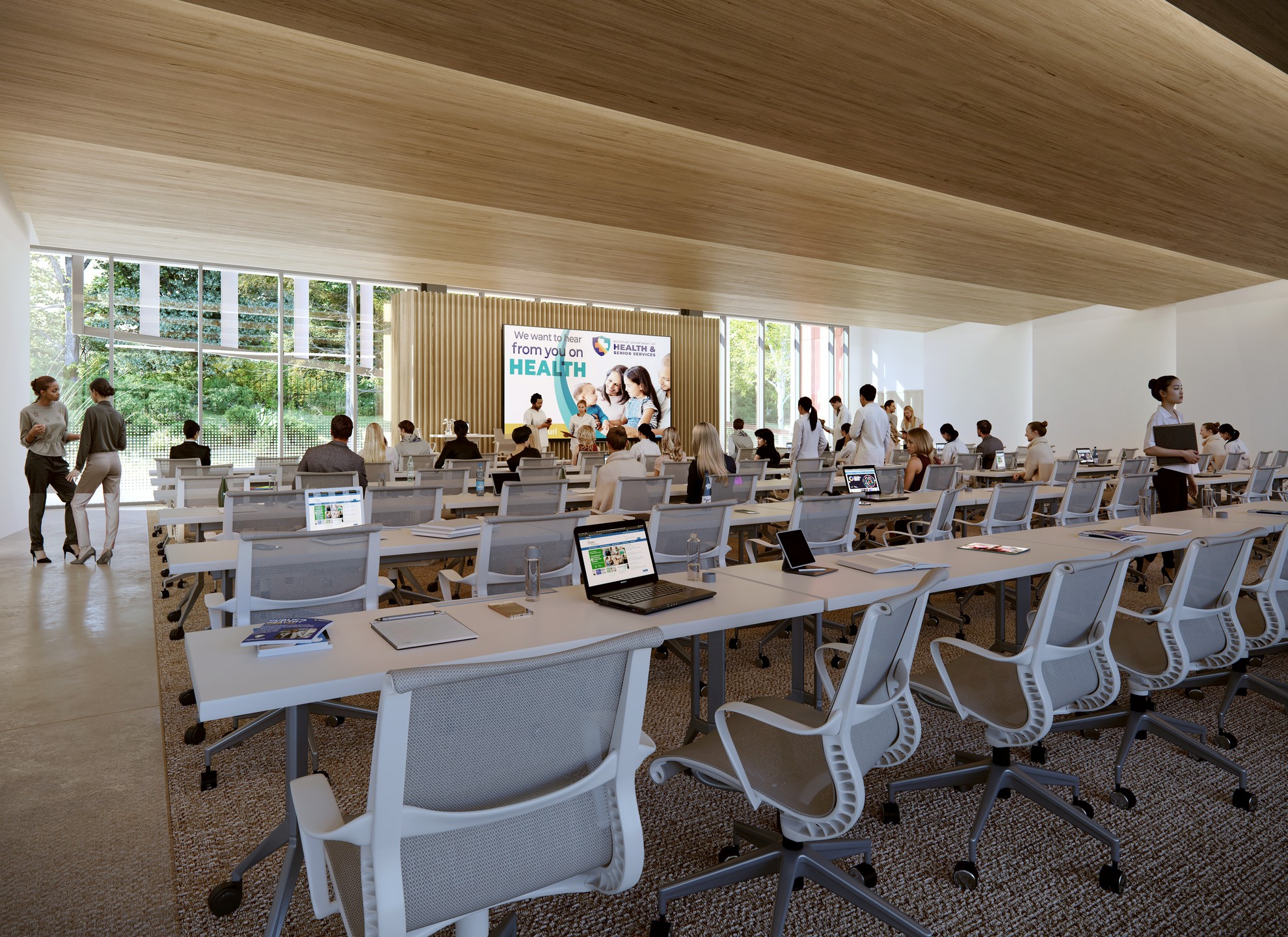
GL: The building is organized around a central shared core that connects all five agencies while maintaining necessary separation for the crime lab. This core includes a two-level lobby, a 200-person meeting room, a pre-function space, and an outdoor roof deck that looks out over a rock bluff and trees. Shared amenities like a fitness center, large communal breakroom, and outdoor seating further support cross-agency engagement.
Each floor features shared conference rooms near main circulation areas, while collaboration zones with natural light and interactive displays are strategically placed at daylight shafts and corridor ends. Dedicated training labs are also available to all agencies, fostering ongoing knowledge exchange and professional development.
GL: A primary design consideration was the inclusion of a tour route for legislators and public officials to observe the work firsthand—supporting transparency and aiding in future state funding efforts.
Over time, the building’s effectiveness will be measured by the talent it attracts and retains, as well as how well it facilitates training and knowledge exchange through spaces like the 200-person meeting room.
Operational success will also be assessed by the efficiency of shared resources—such as loading docks, chemical storage, and waste disposal areas—which are designed to reduce costs and promote collaboration. User feedback will inform future improvements, ensuring the space continues to meet evolving needs.
This interview has been edited and condensed for clarity. The full conversation originally appeared as From Elk to Evidence: Building Missouri’s Next-Gen Laboratory Campus, published by Lab Design News on April 23, 2025.

